

AI Model Uses Earwax Compounds in an Early Parkinson's Screening Study
Researchers in China have reported an early-stage artificial-intelligence approach to screening for Parkinson's disease by analysing odor-related compounds in earwax. Their model classified samples with 94% accuracy in this study. It is not an established diagnostic test, and that figure should not be treated as accuracy in routine care.
The historical report emphasizes early detection because Parkinson's is a progressive neurological disease and says most available treatments can only slow its progression. Existing approaches, including clinical rating scales and neuroimaging, can be subjective or costly. The researchers reported their preliminary, potentially lower-cost screening system in the American Chemical Society journal Analytical Chemistry.
Previous research suggested that changes in sebum, the oily substance produced by skin, could help identify people with Parkinson's. Disease-related processes, including neurodegeneration, systemic inflammation, and oxidative stress, may change the volatile organic compounds (VOCs) it releases and give it a distinctive odor. Sebum on exposed skin can itself be altered by air pollution and humidity, making it a less reliable sample. Skin inside the ear canal is more sheltered, so Hao Dong, Danhua Zhu, and colleagues focused on earwax, which is largely made up of sebum and is relatively easy to collect.
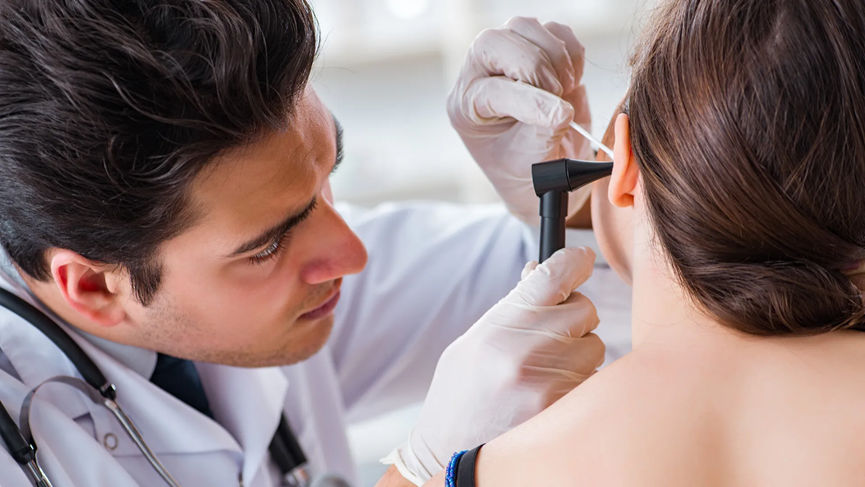
The team swabbed the ear canals of 209 participants, 108 of whom had been diagnosed with Parkinson's, and analysed the secretions by gas chromatography–mass spectrometry. Concentrations of four VOCs differed significantly between the Parkinson's and comparison samples: ethylbenzene, 4-ethyltoluene, pentanal, and 2-pentadecyl-1,3-dioxolane. The researchers identified them as potential biomarkers, not proof of a diagnosis on their own.
Dong, Zhu, and colleagues then used their earwax VOC data to train an artificial-intelligence olfaction system. Its screening model classified Parkinson's and non-Parkinson's earwax samples with 94% accuracy in the reported experiment. The team suggested it might eventually serve as a first-line early-screening tool that supports timely medical care.
Dong stressed that this was a small, single-center experiment in China. The next step, he said, is to study people at different disease stages across multiple research centers and ethnic groups to determine whether the approach has broader utility.
The authors acknowledged support from the National Natural Science Foundation of China, Zhejiang's Lingyan research and development program, and the Fundamental Research Funds for the Central Universities. Image credit in the original article: online image, with no specific creator identified. Original ScienceDaily report.