


Flexible Skin-Mounted Device Explored for Conductive Hearing Loss
Wake Forest University researchers have developed a flexible, noninvasive hearing device that they hope could offer an alternative to implants or corrective surgery for some people with conductive hearing loss. This early study does not establish its effectiveness or safety as a clinical treatment.
Key points
- A skin-mounted array of microscale epidermal actuators creates vibrations behind the ear, intended to bypass blockage in the outer or middle ear and transmit sound toward the inner ear.
- In the researchers' tests, the actuator array increased vibration strength and improved sound quality compared with a single actuator.
- The team sees particular potential for children, for whom an effective noninvasive option could support speech, language, and education; pediatric benefit has not yet been tested here.
The work was led by Mohammad J. Moghimi, an assistant professor of biomedical engineering at Wake Forest University School of Medicine in North Carolina, and published in Communications Engineering, a Nature Portfolio journal. Conductive hearing loss occurs when sound does not pass normally through the outer or middle ear to the inner ear, for example because of infection, obstruction, or structural differences. It is common in childhood.
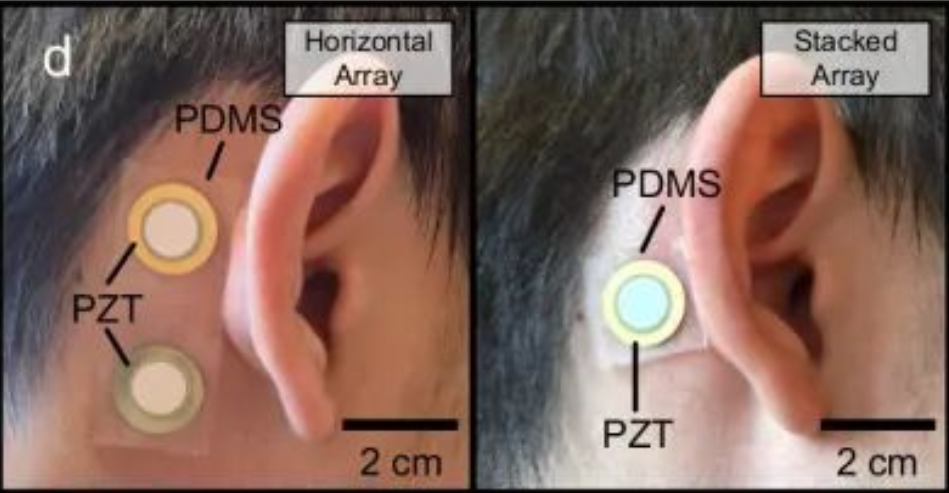
Moghimi noted that treatment can involve corrective surgery or an implanted hearing device, options that may be invasive, especially for pediatric patients. His team designed a flexible device whose epidermal microactuators generate skin vibrations behind the ear. Those vibrations are intended to reach the cochlea, the hearing organ within the inner ear, while bypassing the ear canal.
In the study, 10 participants aged 19–39 wore earplugs and earmuffs to simulate conductive hearing loss. The researchers tested an actuator array for stronger vibrations, better sound quality, and directional control. Moghimi said the array performed better than a single unit on vibration strength and quality in these experiments.
He also argued that improving hearing for children could lessen delays in speech and language development and aid education, potentially improving quality of life. Those are prospective benefits, not outcomes measured in this adult simulation study. The team plans larger clinical trials to assess effectiveness and safety in children and adults. Image credit in the original article: online image, with no specific creator identified. Original Hearing Review report.


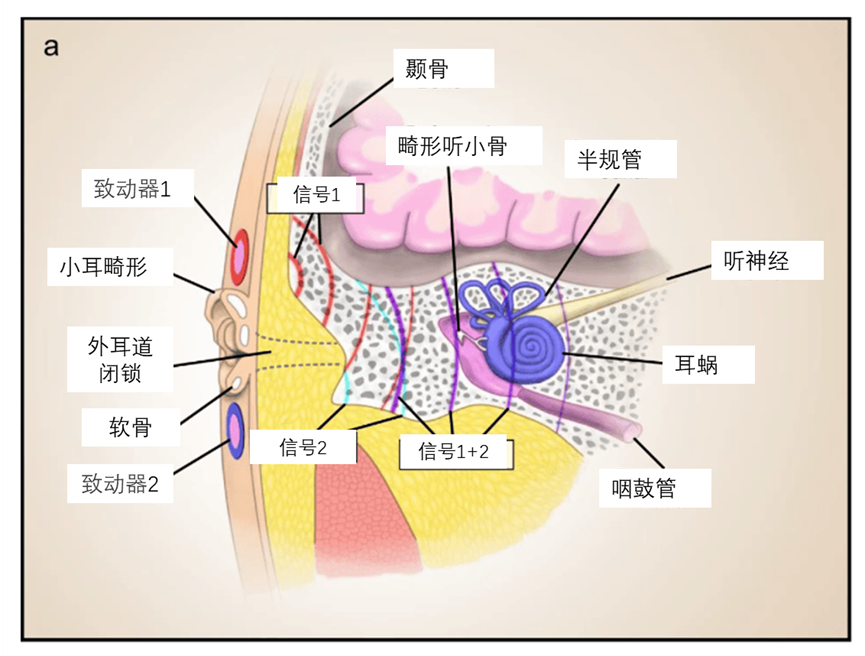
Panel a labels actuator 1, microtia, external auditory canal atresia, cartilage, actuator 2, temporal bone, malformed ossicles, semicircular canals, auditory nerve, cochlea, and Eustachian tube. The pathways are labeled Signal 1, Signal 2, and Signal 1+2.