

Hearing Health Discussed in the Context of China's 2026 Two Sessions
Editor’s note — September 24, 2026
This is Tingoton's commentary on China's 2026 Two Sessions. It describes proposals and anticipated effects, not proof that any subsidy, insurance benefit, service requirement or technology program became law or is currently available. Confirm current policy with official sources before making care or purchasing decisions.
After the seven-day 2026 Two Sessions concluded, Tingoton described hearing care as part of discussions about Healthy China, services for older adults and accessibility. The company argued that hearing health was gaining attention as a public-service and industry issue.
Hearing health in the discussion
The company says delegates and advisers raised issues spanning financial support, services, industry and technology. It cites an estimate that more than 120 million older people in China have hearing loss and links untreated loss with dementia, falls and depression, but provides no primary data for those figures or causal interpretation. Tingoton says some members proposed subsidies or insurance support for hearing aids, cochlear implants and accessories.
The commentary also calls for community screening, county-level diagnosis and municipal rehabilitation services, along with AI captioning, sign-language interpretation and assistive hearing terminals at public-service, medical and transport counters. These are described as proposed directions, not completed nationwide services.
Questions about future access
How might priority groups receive care?
Tingoton anticipates broader screening and basic intervention for older adults, children and people with disabilities. It expects such initiatives, if implemented, to increase demand for hearing aids and other rehabilitation products.
How might devices develop?
The company says policy attention may encourage domestic production and intelligent technology. It lists AI hearing tests, remote adjustment, smart listening assistance and brain–computer interfaces as possible areas of development, not established care available everywhere.
Could professional fitting become easier to access?
Tingoton envisages tighter standards for fitting, product quality and service and closer links among local medical providers, community rehabilitation centers and older-adult care organizations. This is a future-oriented expectation, not a confirmed requirement for all providers.
Tingoton's response
Tingoton says it will continue independent research and design based on user needs, aiming to create hearing-care accessories and equipment suited to Chinese users. It also says it will adjust its product range, lower barriers to use and extend coverage through specialist stores, local medical facilities and rehabilitation institutions. The company also names ear-care education, community hearing screening and help for disadvantaged groups as public-interest activities it intends to pursue. It presents these plans as its contribution to more accessible hearing care.
About Tingoton
Hangzhou Tingoton Technology Co., Ltd. says it was founded in December 2018 in Hangzhou's Binjiang high-tech district. It describes a multidisciplinary team developing hearing-care support products for hearing centers and people with hearing loss.


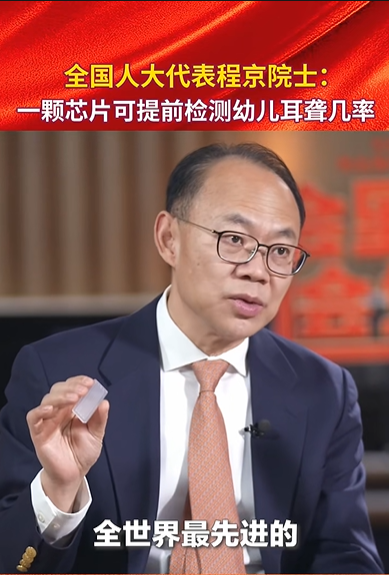
The screenshot headline attributes to National People's Congress deputy and academician Cheng Jing the claim: “A chip could detect the probability of childhood deafness in advance.” A lower subtitle begins “the world's most advanced...” but is cut off and has no complete object.

The China Disabled Persons' Magazine screenshot identifies Long Mo as a member of the Chinese People's Political Consultative Conference. Its headline says she is focusing on hearing health for adults and older people during the 2026 Two Sessions.
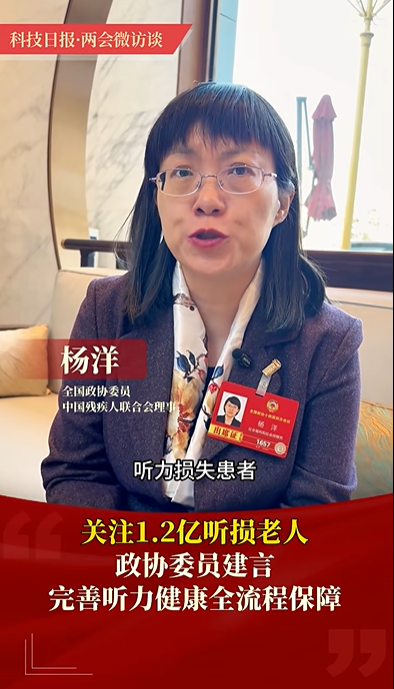
A Science and Technology Daily “Two Sessions micro-interview” screenshot identifies CPPCC member Yang Yang and shows the headline: “Focus on 120 million older people with hearing loss; a CPPCC member proposes improving support across the whole hearing-health pathway.”

The screenshot identifies Kong Junqiang and the 2026 Shandong Two Sessions. Its headline reads: “Do not let down the hopes of 3.66 million people with hearing disabilities; a provincial CPPCC member brings four proposals to speak for people with disabilities.”