

Owl-Inspired Aerogel Targets Both High- and Low-Frequency Noise
Inspired by the quiet flight of owls, researchers developed a lightweight, two-layer aerogel designed to absorb both high- and low-frequency noise. They see potential uses against vehicle and industrial noise, although the reported performance comes from material tests rather than installed products.
Key points
- The biomimetic aerogel imitates the structures of owl skin and feathers to absorb a broad range of sound frequencies.
- In the reported tests, it absorbed 58% of incident sound and reduced measured engine noise by almost 9 dB, outperforming the comparison materials used by the researchers.
- The material is light and retained its structure after repeated compression, suggesting possible uses in vehicles and industrial sound insulation.
Owls' soft feathers and porous skin help reduce sound from flight. A study published in the American Chemical Society journal ACS Applied Materials & Interfaces describes a dual-layer aerogel that mimics those structures. The researchers propose it for reducing traffic and manufacturing noise.
Excessive noise can damage hearing and is associated with other health problems, including cardiovascular disease and type 2 diabetes. When the source cannot be eliminated, sound-absorbing materials can help. Conventional materials may work best either for high-frequency sounds, such as sharp brake noise, or for low-frequency sounds, such as an engine's rumble. Combining layers for broader coverage can increase weight and bulk.
Dingding Zong and colleagues looked to owl feathers and skin for a broadband absorber. Using an emulsion-templated freeze-reconstruction method, they froze n-hexane droplets within a soft layer; removing the frozen n-hexane left a honeycomb pattern. They formed a second, fibrous layer using silicon nanofibers instead of n-hexane droplets. The resulting porous aerogel has a lower layer akin to owl skin, whose small voids counter low-frequency sound, and an upper feather-inspired nanofiber layer that attenuates higher frequencies.
The researchers reported three test results:
- Absorption of 58% of incident sound, above the threshold they used for an effective sound-insulating material.
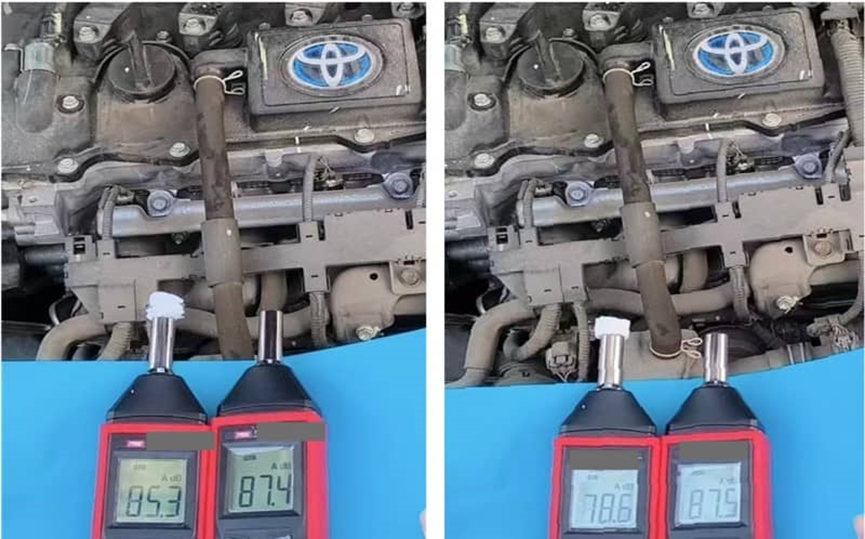
- A reduction in measured car-engine noise from 87.5 dB to 78.6 dB. The article calls this a safe level and says the reduction exceeded that of the high-end comparison materials; those claims depend on the test conditions and are not a personal-exposure assessment.
- Structural integrity after 100 compression cycles, with only 5% deformation.
The team believes these findings point toward high-performance, lightweight, durable absorbers that might reduce noise from industrial machinery and transport. The work was supported by the Tianjin Natural Science Foundation and an open project of the Ministry of Education Key Laboratory of Advanced Textile Composites at Tiangong University. The American Chemical Society published and promoted the peer-reviewed report but did not conduct the research. Image credit in the original article: online image, with no specific creator identified. Original Hearing Review report.