

Researchers Listen for Early Signs of Alzheimer's Disease
Researchers are investigating whether in-ear microphones can detect sounds associated with eye movement and, eventually, help study early signs of neurodegeneration. Alzheimer's disease, which primarily affects older adults, affects more than 50 million people worldwide according to the recovered article. It has no known cure, and its slow progression complicates early diagnosis. The in-ear approach remains exploratory; it has not been established as a diagnostic test.
Researchers from École de Technologie Supérieure in Canada and Dartmouth University are exploring the method. Miriam Boutros planned to present the work at the Acoustical Society of America's 187th virtual meeting, held November 18–22, 2024. Alzheimer's disease can affect motor control as well as cognition. Saccades, the rapid eye movements used to shift gaze, may be slower, less accurate or delayed in people with the condition.
“Eye movements are remarkable because they are among the body's fastest and most precise movements, requiring both excellent motor skills and cognitive function,” researcher Arian Shamei said. Direct eye tracking requires equipment that is not always readily available. Boutros and colleagues are therefore exploring microphones inside hearables. The work is co-led by Rachel Bouserhal of École de Technologie Supérieure's Hearing Health and Assistive Devices laboratory (RHAD) and Chris Niemczak of Dartmouth University's Geisel School of Medicine.
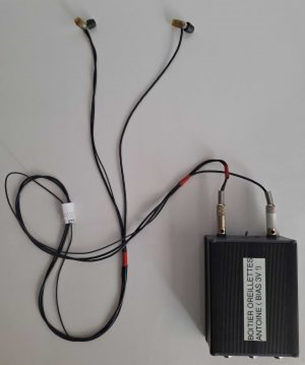
“We are using a device known as a hearable,” Boutros said. “It is an earbud with an in-ear microphone that can capture physiological signals from the body. Our goal is to develop health-monitoring algorithms for hearables that could enable continuous, long-term monitoring and early disease detection.”
Eye movements, including saccades, cause vibrations of the eardrum that sensitive in-ear microphones may detect. In experiments with volunteers, the team is using both hearables and conventional eye trackers to identify ear signals corresponding to eye movements and explore whether patterns differ between healthy people and people with neurodegenerative disease. The researchers hope this work may eventually lead to non-invasive devices for continuous monitoring of Alzheimer's disease and other neurodegenerative conditions.
“Although our current focus is long-term monitoring of Alzheimer's disease, ultimately we hope to address other diseases and distinguish them through symptoms that can be tracked in signals from the ear,” Shamei said.
Original report: Acoustical Society of America.