

Three Hearing-Technology Trends Discussed Around CES 2026
After CES 2026 in Las Vegas, this commentary considered possible directions for hearing technology. It explicitly describes itself as a simulated analysis of industry trends for public education, not a verified catalogue of products on sale or a recommendation to buy them. Its examples and predicted benefits should be read in that speculative context.
Three technologies discussed around CES
1. Hearing support in eyewear
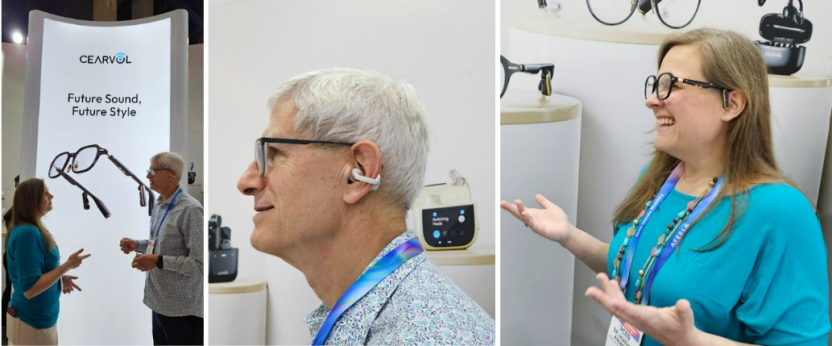
The commentary describes hearing glasses as an example of a move beyond conventional behind-the-ear devices. It names EssilorLuxottica's Nuance Audio and the Cearvol Lyra series, and imagines miniature microphone arrays and directional beamforming built into frames. In the described design, gaze direction helps identify a speaker ahead, while open speakers or bone conduction deliver sound without an in-ear tip. The article does not establish that every named model has all of these capabilities.
2. A screen-equipped charging case
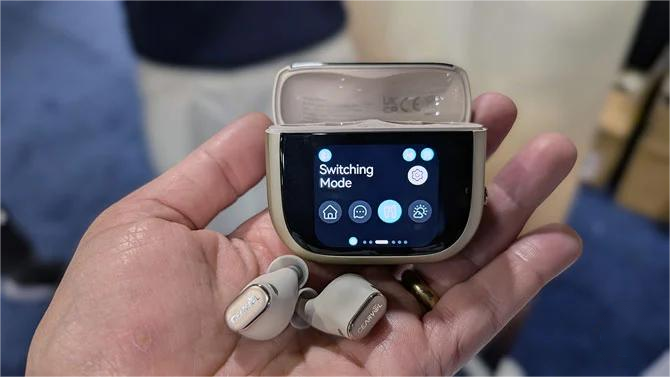
A charging case with its own touchscreen could let a wearer change listening modes, check battery level and adjust noise management without using a phone app. Restaurant and theater modes are examples in the commentary. This is presented as an interaction trend, not evidence that all hearing aids support those controls.
3. Neural-network processing and translation
The article points to processors such as the NPU described for ELEHEAR Delight and discusses millisecond-scale analysis of acoustic surroundings. It envisions AI separating speech from other sounds and, in some premium devices, translating a foreign language into speech heard by the wearer. The actual performance and availability of these features are not established by the trend analysis.
Possible effects for people with hearing loss
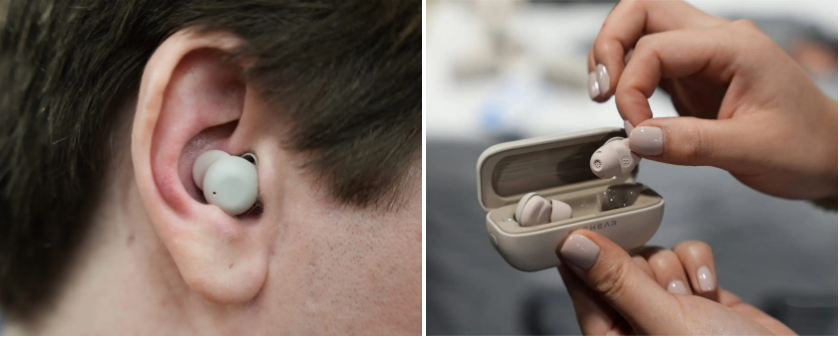
The author suggests that placing hearing functions in fashionable glasses or true-wireless earbuds might reduce the stigma some people attach to visible hearing aids. Better directional pickup might help with speech in noisy gatherings or streets and reduce listening effort. Visual controls could make settings easier for older users who are uncomfortable with smartphones. These are potential benefits; the article does not provide user-outcome trials.
Three possible industry trends
- Over-the-counter options may expand and segment the market. The author envisages easier consumer purchases for some people with mild to moderate loss, alongside clinical services for more complex needs. Regulatory rules and suitability depend on jurisdiction and individual assessment.
- Devices may combine functions. Eyewear, earbuds and hearing aids could increasingly overlap, perhaps adding heart-rate monitoring, fall alerts or posture feedback. These are possible future features, not claims that the named CES products already provide them.
- Software may become more important. As hardware converges, the author expects competition in sound-processing algorithms and individual fitting profiles rather than in hardware alone.
The commentary ends on an optimistic view that hearing technology may make communication easier. It is not medical advice or a product endorsement. Anyone with hearing concerns should consult an audiologist or ear, nose and throat clinician instead of diagnosing a condition or buying a medical device on the basis of this trend discussion.