

Understanding and Reducing the Health Burden of Noise
Editor’s note — September 24, 2026
This historical article gives specific health-association figures without enough primary-study detail to verify them. They should not be used as causal claims or estimates of an individual's risk. Its 50 dB daytime and 45 dB nighttime figures are not universal current residential limits in China. Under GB 3096-2008, limits vary by acoustic functional zone: Class 0 is 50 dB(A) by day and 40 dB(A) at night; Class 1 is 55 dB(A) by day and 45 dB(A) at night. The applicable class for any location must be determined separately. See also the WHO environmental noise guidelines for a public-health, rather than site-specific legal, framework.
China's Ministry of Environmental Protection reported in its 2017 report on environmental noise pollution prevention and control that noise was a prominent problem in Chinese cities and that nighttime levels exceeded standards in about 40% of cities. The article cites an International Organization for Standardization survey describing 50 dB by day and 45 dB by night as levels at which noise can disturb sleep or rest, and says Chinese residential-area standards use the same limits. The figures reflect the cited historical reports and should not be read as a statement of current legal limits.
The article compares 30 dB with a quiet conversation, 40 dB with an ordinary refrigerator hum and 50 dB with moderate rain. It says sounds above 70 dB can interfere with normal conversation.
Part 1: Noise pollution in China
The article reports that both sound-environment compliance figures and residents' complaints suggested worsening urban noise at the time it was written. Construction was one cause: many sites had tight schedules and night work, while daytime limits on heavy vehicles in some cities pushed construction traffic into the evening. It also names entertainment venues and public activities, including outdoor group dancing, as sources of tension between participants and nearby residents seeking quiet.
Traffic noise was another unresolved problem. The article cites research suggesting that, even without nighttime horn use, tire–road friction above 40 km/h accounts for 80% of traffic noise; heavier vehicles, greater speed and higher traffic volume increase noise further. It says residents near railways or airports may experience levels close to 100 dB. The reported levels are not measurements for any particular place today.
Part 2: Possible effects on health
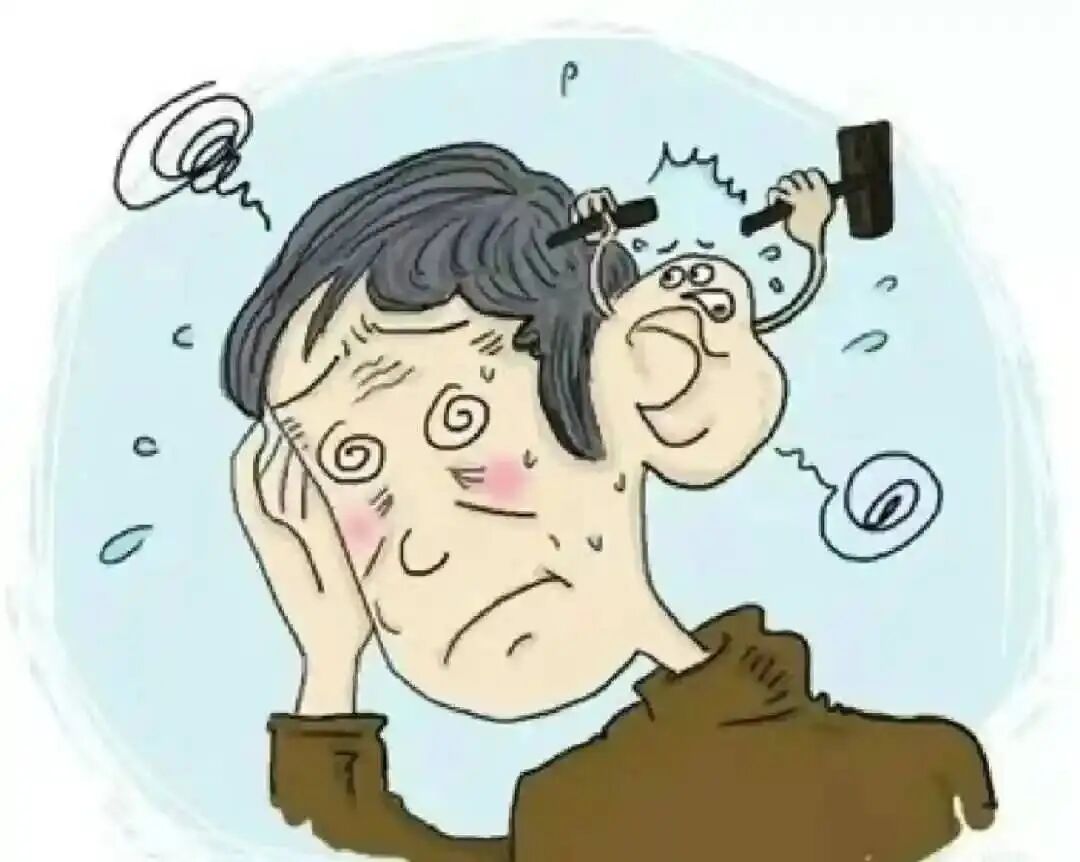
The article refers to a World Health Organization report published in late 2011 on the burden of disease from environmental noise and describes noise as a major health concern after air pollution. It says sudden intense noise can damage the eardrum and contribute to hearing loss; vestibular damage can be accompanied by dizziness, vomiting or unsteady walking. It also links prolonged noisy sleep environments with autonomic disturbance and digestive problems, and describes effects of sleep disruption and stress on mood and immune health.
The article links even relatively low-level noise with disrupted normal heart-rate patterns and that long-term exposure may contribute to cardiovascular problems. It claims noise over 35 dB from road traffic, aircraft or snoring is associated with higher blood pressure, with each 5 dB increase in aircraft noise corresponding to a 0.65 mmHg increase in both systolic and diastolic pressure. The estimates describe reported associations, not a prediction for any individual.
Other associations reported in the article include a 1 cm greater waist circumference per 10 dB increase in environmental noise and an average 6 cm difference for people living near airports. The article also links aircraft noise near large airports may affect children's development and reading, and makes a broad claim of 20% lower intellectual development among children in noisy rather than quiet environments. It also reports that each 10 dB increase in traffic noise around homes is associated with a 5%–8% higher chance of difficulty conceiving, and each 6 dB increase with a 15–23 g lower newborn birth weight and later cardiovascular risk. These reported associations do not by themselves establish causality or apply to every person.
Part 3: Preventing and managing noise
The article describes the ability to rest quietly as a basic interest to protect and cites the International Covenant on Economic, Social and Cultural Rights as part of its rights framing. It recalls that Austrian health authorities treated industrial and commercial noise as a public-health nuisance by the late nineteenth century and that some US cities began legislative controls in the early twentieth century. It argues that addressing noise in China requires sustained government and institutional action.
1. Better urban planning
The article calls for separating housing from industrial sites, entertainment districts and heavy-traffic corridors. It points to land-use notices in some cities abroad as one way to plan more compatible uses, while recognizing the difficulty posed by dense and costly land in major Chinese cities. Sound barriers are another option. The article cites a barrier beside the railway at Beijing South Station, more than 400 m long and 3.5 m high, intended to reduce railway and station noise reaching nearby residents.
2. Stronger building standards
The article says China's residential building standards specify sound-insulating wall thickness, but alleges that some developers reduce thickness to increase usable floor area, leaving residents exposed to outdoor and neighboring-unit noise. It calls for stronger standards and enforcement. The allegation is not an assessment of any particular building.
3. Quieter product design
Product design can help limit noise spread. For example, the article suggests that outdoor speakers used for group dancing could use more directional acoustic materials or enclosures to reduce sound transmitted in all directions.
4. More consistent noise management
The article recommends managing noise from late-night street dining and entertainment venues and notes that residents may use lawful complaint channels when noise disrupts them. It urges enforcement against persistent sources.
For personal protection, the article suggests reducing exposure, closing windows when the environment cannot be changed, and considering protective earplugs. It warns against raising headphone volume to overcome surrounding noise. Its suggested listening limit is no more than 60 dB for no more than 60 minutes at a time; individuals should seek professional advice for hearing concerns rather than treat that historical rule as a personalized safe-exposure guarantee.
Further reading: Zhihu section.